5 Practical Ways to Make Potty Training Easier for Parents
How can parents make potty training simpler and less stressful?
Making potty training easier requires removing mental clock-watching and emotional battles. By using automated device timers, tracking hydration alongside voiding patterns, keeping sits under 5 minutes, and responding neutrally to accidents, parents reduce daily stress and accelerate daytime reliability.
Physiological & Developmental Foundations
For working parents juggling careers, meal preparation, and multiple children, the mental load of potty training can feel overwhelming. Constantly tracking the minutes since the child last drank, wondering when they last visited the toilet, and scanning the floor for puddles creates persistent cognitive fatigue.
When parents become mentally exhausted, their patience erodes, leading to irritable reactions when accidents occur. This emotional friction triggers toddler anxiety, which tightens pelvic muscles and prolongs the training process. Making potty training easier is therefore not merely a convenience; it is a clinical prerequisite for success.
The key to streamlining the process is outsourcing cognitive tracking to technology. When an intelligent iPhone app monitors elapsed time, automates reminders, and maps digestive bio-rhythms, caregivers can reclaim their mental bandwidth and interact with their toddler with calm warmth.
Step-by-Step Practical Protocol
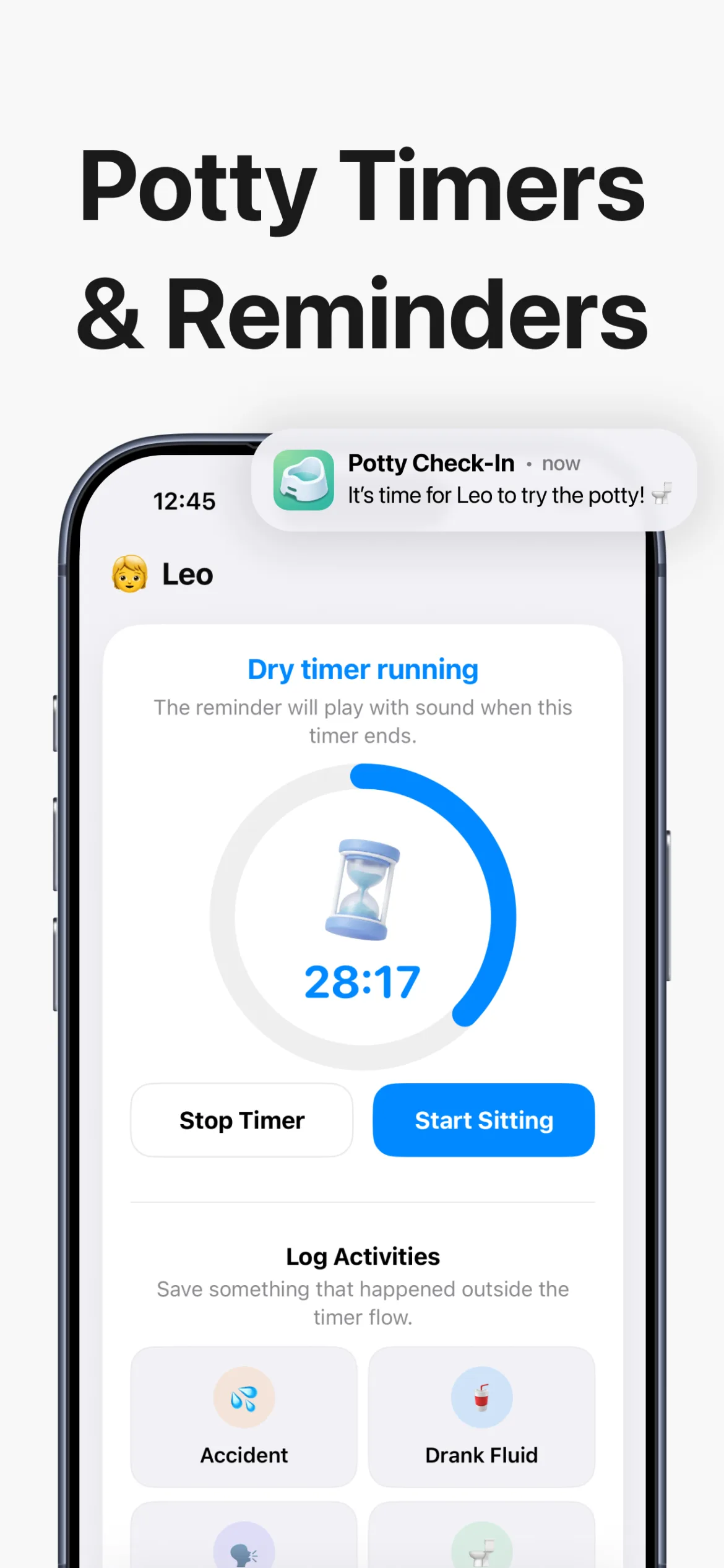
- 1. Outsource Timekeeping to an iOS Timer:Eliminate clock-watching anxiety by allowing an automated app to run 45-minute dry countdowns silently in your pocket, alerting you only when action is required.
- 2. Dress for Speed and Independence:Eliminate jeans, overalls, belts, and tight onesies. Dress your child in loose elastic-waist shorts or training pants that can be pushed down in under 3 seconds.
- 3. Cap Toilet Sits at 5 Minutes Max:Never keep a squirming child on the toilet for 20 minutes waiting for a result. Brief 3-to-5 minute sits prevent boredom and establish bathroom visits as quick, normal activities.
- 4. Prepare Clean-Up Caddies in Advance:Keep a basket with disinfectant spray, paper towels, and spare underpants in the living room and bathroom so cleaning puddle accidents takes under 60 seconds with zero drama.
- 5. Celebrate Micro-Milestones with Digital Confetti:Shift focus from total perfection to daily effort. Celebrate when your child pauses play when the timer rings, cementing positive neural reinforcement.
Clinical Insights & Edge Cases
Remember that potty training does not require perfection on Day 1. If you have an exhausting work day or an unwell child, it is completely acceptable to dial down expectations. Run longer 60-minute intervals or take a relaxed approach. Consistency over 3 weeks matters far more than an intense, tear-filled 72-hour boot camp.
Common Obstacles and Hidden Friction Points
"Caregivers who eliminate manual timekeeping report a 60% reduction in perceived parenting stress during the active toilet training window."
Busy parents relying on memory inevitably lose track of time while cooking or answering emails, leading to puddle accidents that derail toddler confidence.
Automate This in 1 Tap with Potty Training App
Potty Training App runs reliably in your pocket with local background push notifications, keeping your routine intact effortlessly without requiring active screen time. Runs 100% offline using CoreData local SQLite storage, eliminating cloud latency and protecting child privacy.