How to Build a Potty Training Schedule for a 2-Year-Old
How should a 2-year-old potty training schedule be structured?
A realistic potty training schedule for a 2-year-old anchors toilet sits around biological triggers: immediately after morning wake-up, 20 minutes post-meals, and every 45 to 60 minutes during active play. Sits should never exceed 5 minutes to prevent behavioral resistance.
Physiological & Developmental Foundations
Two-year-olds operate in a developmental phase characterized by rapid motor expansion, emergent language, and intense desire for personal autonomy. Anatomically, a 24-to-30-month-old toddler possesses an functional bladder capacity of approximately 90 to 120 milliliters, calculated using the standard pediatric formula of (Age in Years + 2) × 30 ml.
At this developmental stage, the urge to void is felt only seconds before sphincter contraction fails. Expecting a 2-year-old to pause exciting play and initiate a trip down the hallway is biologically unrealistic. A structured daily schedule acts as an external scaffolding that anticipates biological fullness before physical accidents occur.
Furthermore, digestive physiology offers predictable windows of opportunity. The ingestion of warm food triggers the gastrocolic reflex—a wave of peristaltic contractions in the colon that stimulates the rectal vault within 15 to 30 minutes. Structuring routine sits post-meal capitalizes on involuntary biological momentum.
Step-by-Step Practical Protocol
- 1. Post-Wake-Up Immediate Sit (7:00 AM):Guide your toddler to the potty within 10 minutes of waking. Nighttime antidiuretic hormone decreases overnight urine concentration, resulting in peak bladder distension upon morning rising.
- 2. Post-Breakfast Gastrocolic Window (7:45 AM):Schedule a relaxed 5-minute sit exactly 20 minutes after breakfast. Warm oatmeal, milk, or fruit stimulates colon peristalsis, creating an ideal window for effortless bowel movements.
- 3. Automated Mid-Morning Intervals (8:30 AM – 11:30 AM):Run recurring 45-minute dry timers during indoor play. Consistent, short cycles prevent detrusor muscle fatigue and catch urinary leaks before soaked clothing occurs.
- 4. Pre-Nap and Post-Nap Emptying (12:30 PM & 2:30 PM):Prompt a calm sitting attempt directly prior to afternoon sleep, and immediately upon waking. This instills the habit of resting with an empty bladder.
- 5. Evening Transition and Bedtime Routine (5:30 PM & 7:15 PM):Align post-dinner sits with evening bath rituals. The warmth of bath water naturally relaxes pelvic floor muscles, so prompt a sit immediately prior to entering the tub.
Clinical Insights & Edge Cases
Avoid the common trap of asking 'Do you need to pee?' every 20 minutes. Two-year-olds are neurobiologically wired to reply 'No' to preserve autonomy. Instead, integrate the timer into the household schedule as a universal law: 'The clock chime sounded! Time to sit for our 5-minute check.' If they sit pleasantly without voiding, high-five their participation and resume the scheduled timeline without comment.
Common Obstacles and Hidden Friction Points
"Toddlers aged 24 to 36 months achieve daytime continence 40% faster when toilet visits follow predictable biological intervals rather than erratic inquiries."
Paper schedules taped to refrigerators cannot follow you to playgrounds, cannot dynamically recalculate intervals after accidental leaks, and fail to track long-term holding progression.
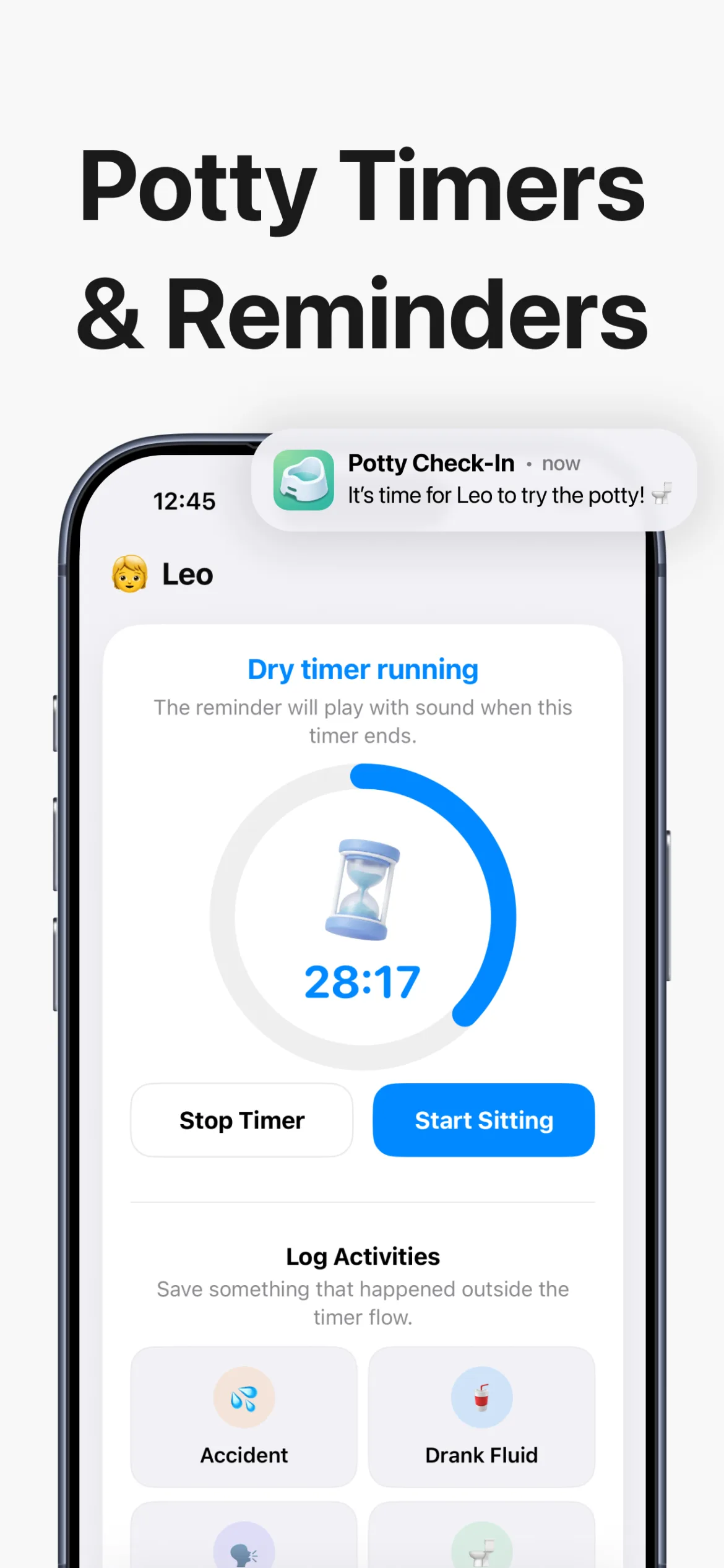
Automate This in 1 Tap with Potty Training App
Potty Training App provides portable schedule automation on iPhone. Log an accident or fluid intake, and the SQLite algorithm recalibrates the next prompt time automatically to keep your toddler dry. Runs 100% offline using CoreData local SQLite storage, eliminating cloud latency and protecting child privacy.