How to Coordinate Potty Training with Daycare and Preschool
How can parents successfully coordinate potty training with daycare staff?
To coordinate potty training with daycare, share your child's exact timer interval with teachers, provide 4 to 5 spare changes of elastic-waist clothing, and ensure both environments use the same sitting routine. Consistent post-meal visits and positive reinforcement prevent stressful preschool regressions.
Physiological & Developmental Foundations
One of the most common causes of potty training setbacks is inconsistency between home protocols and institutional daycare routines. At home, a child may have constant one-on-one attention and immediate access to a low floor potty. At daycare, childcare workers manage 8 to 12 toddlers simultaneously, often adhering to rigid group bathroom schedules that do not match an individual child's biological rhythms.
Furthermore, commercial daycares frequently mandate that children wear disposable pull-ups until they have gone an entire week without an accident. This policy inadvertently prolongs training: pull-ups wick away moisture, eliminating the sensory awareness required for continence.
Overcoming this split requires open, collaborative communication. By presenting daycare providers with concrete data—such as your child's average dry hold window and post-meal voiding cadence—parents can help teachers anticipate bathroom visits before puddle accidents occur in the classroom.
Step-by-Step Practical Protocol
- 1. Audit Daycare Toilet Policies in Advance:Ask your childcare provider about their specific bathroom transition guidelines: do they schedule group toilet runs every 60 minutes, or allow child-led requests?
- 2. Share Concrete Interval Data with Teachers:Inform teachers of your child's average dry hold time (e.g., 'Leo reliably voids every 50 minutes and 20 minutes after lunch'). Data-driven requests receive higher caregiver compliance.
- 3. Pack 5 Complete Spare Clothing Sets:Provide multiple pairs of loose pants, socks, and shoes. Stress-free clothing changes prevent childcare workers from defaulting back to pull-ups.
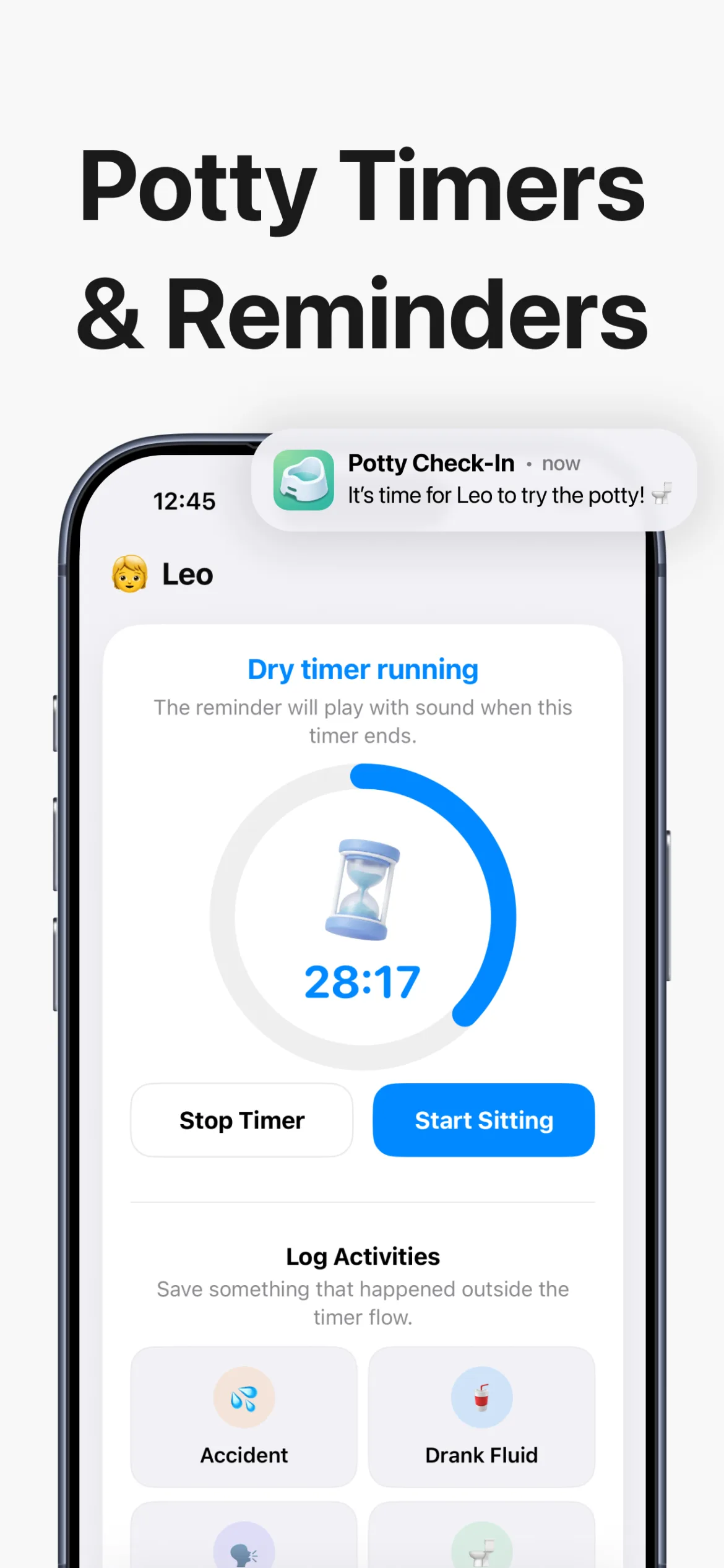
- 4. Maintain Identical Weekend Routines:Do not slack off on Saturdays and Sundays. Keep running your 60-minute iPhone timer throughout the weekend so the child's neurological habit remains unbroken.
- 5. Review Daily Preschool Void Logs:Input daycare voiding reports into your iPhone app each evening to track whether the child is holding urine all day at preschool and releasing at home.
Clinical Insights & Edge Cases
Many toddlers 'withhold' urine and stool for 7 consecutive hours at daycare due to anxiety over unfamiliar, noisy commercial toilets with loud automatic sensors. If your child arrives home with a distended abdomen and immediately floods their clothes, practice desensitizing them to public bathroom sounds over the weekend.
Common Obstacles and Hidden Friction Points
"Toddlers whose home timer intervals match their daycare bathroom schedules experience 60% fewer classroom accidents and transition to full continence 2 weeks earlier."
Assuming daycare workers can track an individual child's unique bladder cues without structured interval data leads to chronic puddle accidents and diaper relapses.
Automate This in 1 Tap with Potty Training App
Potty Training App allows you to view daily average dry intervals at a glance, making it simple to write a precise 1-sentence timing note for your child's preschool teacher. Runs 100% offline using CoreData local SQLite storage, eliminating cloud latency and protecting child privacy.