Why Your Potty-Trained Child Keeps Having Accidents
Why is a previously potty-trained child having frequent accidents?
Potty-trained children keep having accidents primarily due to intense play distraction, constipation pressing against the bladder, or urinary tract irritation. Children frequently ignore mild bladder signals until capacity is exceeded. Re-introducing scheduled 60-minute check-ins quickly eliminates play-related accidents without causing regression.
Physiological & Developmental Foundations
When a child who has been reliably continent for weeks or months begins wetting their trousers once or twice a day, parents often react with dismay and confusion. It is crucial to understand that newly potty-trained toddlers do not possess adult-like interoception. Their awareness of bladder fullness is easily overridden by high-dopamine activities like building block towers, watching animated videos, or playing outdoors.
During deep immersion in play, the child consciously feels the bladder fullness sensation but repeatedly 'postpones' visiting the bathroom, assuming they can hold on indefinitely. Eventually, bladder pressure surpasses the closure pressure of the external sphincter, resulting in sudden overflow wetness. The child often looks startled or upset because they did not intend to leak.
In addition, subclinical constipation is extraordinarily common in potty-trained children. Even if the child passes stool daily, incomplete evacuation leaves a firm fecal mass sitting in the rectal vault. This mass physically encroaches on bladder volume, triggering sudden spasms and daytime incontinence.
Step-by-Step Practical Protocol
- 1. Screen for High-Dopamine Play Immersion:Note whether accidents happen predominantly during screen time, playdates, or creative building. This confirms play distraction rather than physiological regression.
- 2. Audit Stool Frequency and Texture:Examine your child's stool logs. If bowel movements resemble Type 1 or Type 2 on the Bristol Stool Chart (hard lumps or pebbles), address constipation with fiber and water.
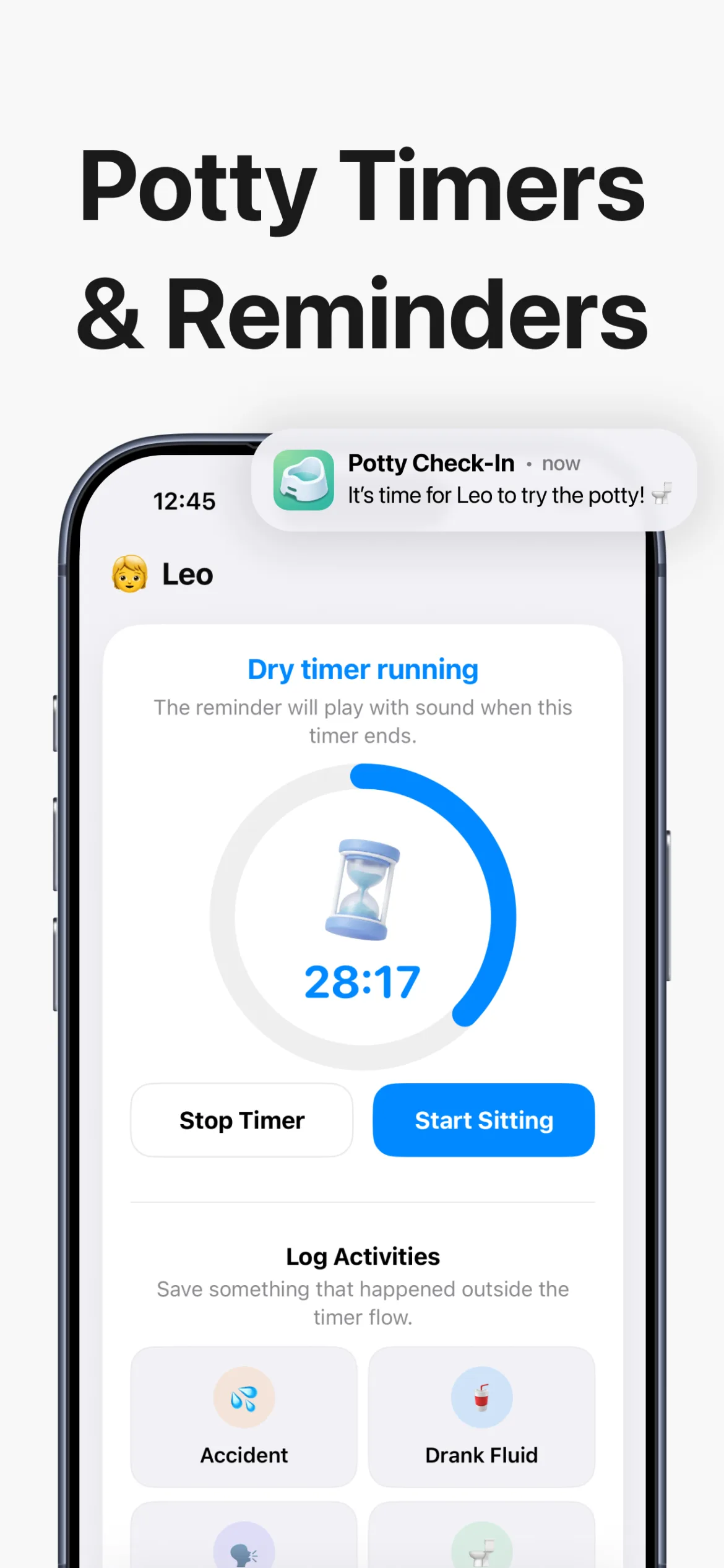
- 3. Re-Introduce Scheduled 60-Minute Timers:Reinstate an objective background dry timer set to 60 or 75 minutes. This takes the burden of remembering off the distracted child's shoulders.
- 4. Establish Scheduled Mandatory Play Breaks:Institute brief bathroom check-ins before starting high-interest activities or leaving the house. Say: 'We are going to do a quick 2-minute check before building the train track.'
- 5. Keep Accident Clean-Ups Calm and Educational:Have your child assist in changing clothes and carrying wet items to the laundry hamper. This reinforces responsibility without introducing anxiety or shame.
Clinical Insights & Edge Cases
Never scold or demand: 'Why didn't you just tell me you needed to pee?!' A distracted 3-year-old genuinely does not realize their bladder is at 100% capacity until the urine begins flowing. Scolding breeds secrecy, leading toddlers to hide wet underwear behind furniture to avoid disappointing their parents.
Common Obstacles and Hidden Friction Points
"Over 70% of daytime wetting accidents in 3-to-4-year-olds occur during periods of deep imaginative play where interoceptive cues are ignored."
Interrogating children after accidents increases emotional stress, which tightens the pelvic floor and ironically leads to more frequent leaks.
Automate This in 1 Tap with Potty Training App
Log accidents in 1 tap with Potty Training App. The app resets your dry timer flow smoothly and adjusts your timeline without scolding or judgment. Runs 100% offline using CoreData local SQLite storage, eliminating cloud latency and protecting child privacy.