How to Master the 3-Day Potty Training Method with a Timer
How does the 3-day potty training method work with an automated timer?
The 3-day potty training method combines intensive bare-bottom observation with automated 30 to 45 minute timer intervals. Parents clear their schedules, increase fluid intake, and use gentle audio chimes to guide toddlers to the potty every 45 minutes, achieving rapid daytime awareness in 72 hours.
Physiological & Developmental Foundations
The 3-day intensive potty training protocol—often popularized as the 'bare-bottom' or 'fast-track' method—relies on high-frequency behavioral conditioning. By removing diapers and pants entirely for the first 24 to 48 hours, caregivers eliminate the familiar absorbency that allows toddlers to ignore urination. When urine flows freely without a diaper, the visceral sensory feedback is immediate and unmistakable.
However, the primary failure point of the traditional 3-day method is parent exhaustion. Staring intently at a toddler for 12 hours a day waiting for the first sign of an accident creates immense psychological pressure for both caregiver and child. Parents become hyper-vigilant, barking 'Do you need to go?!' every five minutes until the child shuts down.
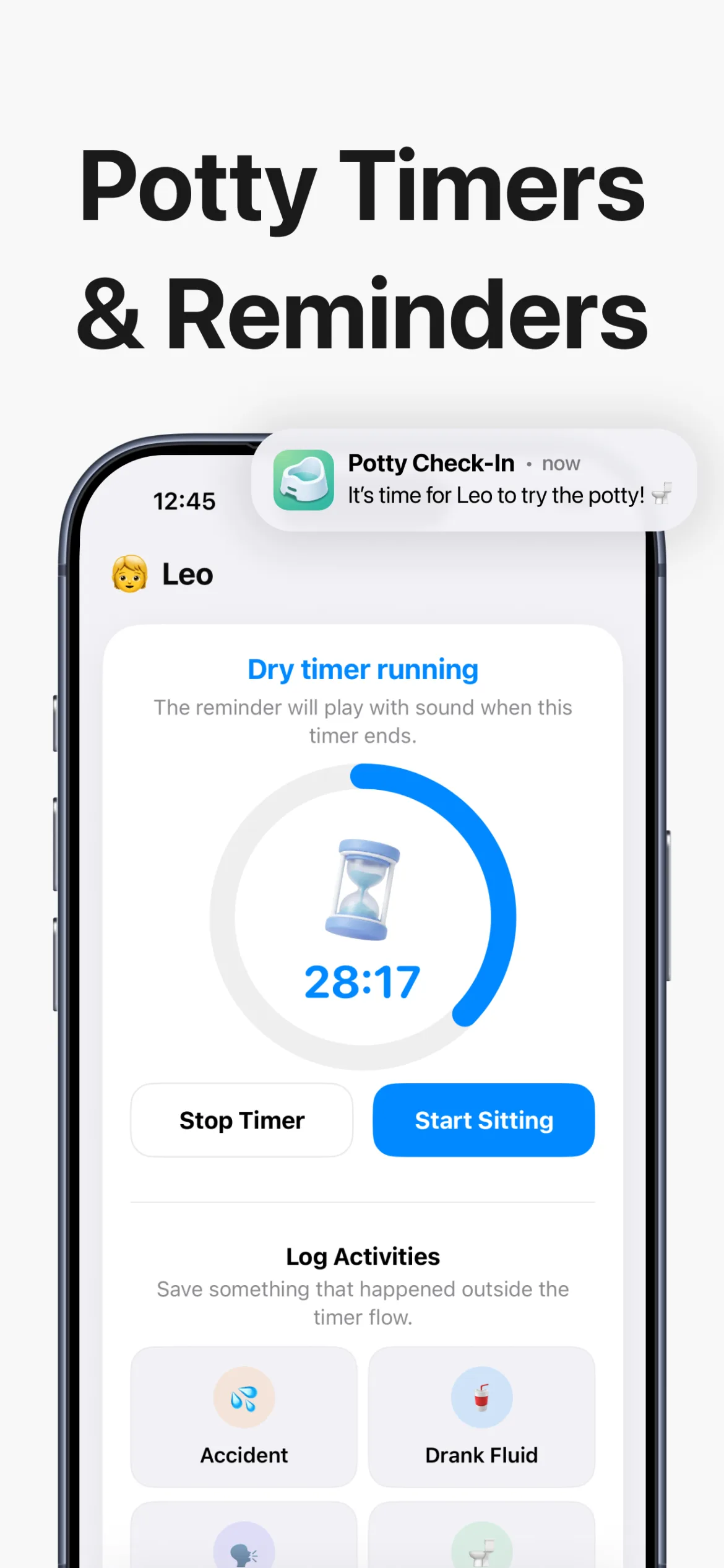
Integrating an automated iPhone interval timer transforms this high-stress weekend. Instead of relying on guesswork, the caregiver lets a 30-to-45-minute countdown govern the rhythm. Fluid intake is systematically increased, and every time the gentle chime sounds, parent and child calmly walk to the potty for a 3-minute check.
Step-by-Step Practical Protocol
- 1. Clear 72 Hours on the Family Calendar:Dedicate three consecutive uninterrupted days at home. Cancel outings, playdates, and errands so all parental focus is dedicated to routine consistency.
- 2. Execute Day 1 Bare-Bottom Immersion:Keep your child completely bare from the waist down. Place potty chairs within immediate sight in the living area and main hallway to minimize transit time.
- 3. Push Hydration Systematically:Offer diluted fruit juice, smoothies, ice pops, or water every 20 minutes to generate frequent bladder filling cycles (every 30 to 45 minutes) for rapid learning.
- 4. Run Automated 30-Minute Dry Countdowns:Set your iPhone timer to 30 minutes on Day 1. When the chime sounds, transition calmly to the potty for a 3-to-5 minute sit. Log every void immediately.
- 5. Transition to Loose Pants on Day 2 and Day 3:On Day 2, introduce loose cotton pants without underwear (commando). Underwear hugs the buttocks and mimics the snug sensation of a diaper, triggering accidental releases.
Clinical Insights & Edge Cases
Expect multiple floor puddles on Day 1. If an accident begins, calmly lift your child mid-stream and rush to the potty chair, saying: 'Pee goes in the potty!' If even two drops land in the bowl, offer enthusiastic praise: 'You put pee in the potty!' This anchors positive reinforcement to the correct destination.
Common Obstacles and Hidden Friction Points
"Pairing bare-bottom sensory feedback with a structured 45-minute interval timer accelerates sphincter awareness, cutting Day 3 accident rates by 68%."
Relying on constant visual surveillance without a timer exhausts parents by 2:00 PM on Day 1, leading to missed cues and messy carpet disasters.
Automate This in 1 Tap with Potty Training App
Potty Training App provides the exact timer framework needed for the 3-day protocol, transitioning from 30-minute Day 1 cycles to 60-minute Day 3 intervals with 1-tap logging. Runs 100% offline using CoreData local SQLite storage, eliminating cloud latency and protecting child privacy.