How to Transition Your Toddler from Potty Chair to the Adult Toilet
How do you transition a toddler from a small potty chair to the adult toilet?
Transitioning from a small potty to the adult toilet requires installing an integrated reducer seat, placing a two-step footstool for flat-footed support, and desensitizing flush noise. Moving the floor potty next to the big toilet creates an easy stepping-stone.
Physiological & Developmental Foundations
While low plastic floor potty chairs are ideal for initial training due to their non-threatening height and natural squatting ergonomics, they are messy to clean and unavailable in schools, restaurants, or friends' homes. Eventually, every continent child must graduate to using standard porcelain adult toilets.
This transition frequently stalls because of primal toddler fears. To a 30-pound child, an adult toilet bowl is a towering cavern filled with churning water that swallows waste. Children frequently harbor irrational fears of falling in, or worry that their own bodies might be sucked down the drain when the toilet flushes.
Facilitating this transition requires physical security and emotional desensitization. A child cannot relax their pelvic floor if their legs are dangling in mid-air; physical instability triggers an involuntary muscular contraction to maintain balance, preventing complete bladder and bowel emptying.
Step-by-Step Practical Protocol
- 1. Install a Secure Integrated Reducer Seat:Replace loose, wobbly snap-on rings with a permanent family toilet seat featuring a built-in magnetic toddler reducer lid. Stability eliminates the fear of slipping.
- 2. Provide a Sturdy Two-Step Footstool:Position a dual-step stool in front of the toilet so your toddler can climb up independently and rest their feet completely flat while seated.
- 3. Relocate the Floor Potty Next to the Big Toilet:Move the familiar floor potty directly beside the porcelain toilet for 5 days. Then invite them: 'Do you want to use the little seat or try the big-kid mountain seat today?'
- 4. Address Flush Anxiety Systematically:Let your toddler stand up and step out of the stall or room before flushing. Gradually invite them to push the handle themselves once the noise is no longer terrifying.
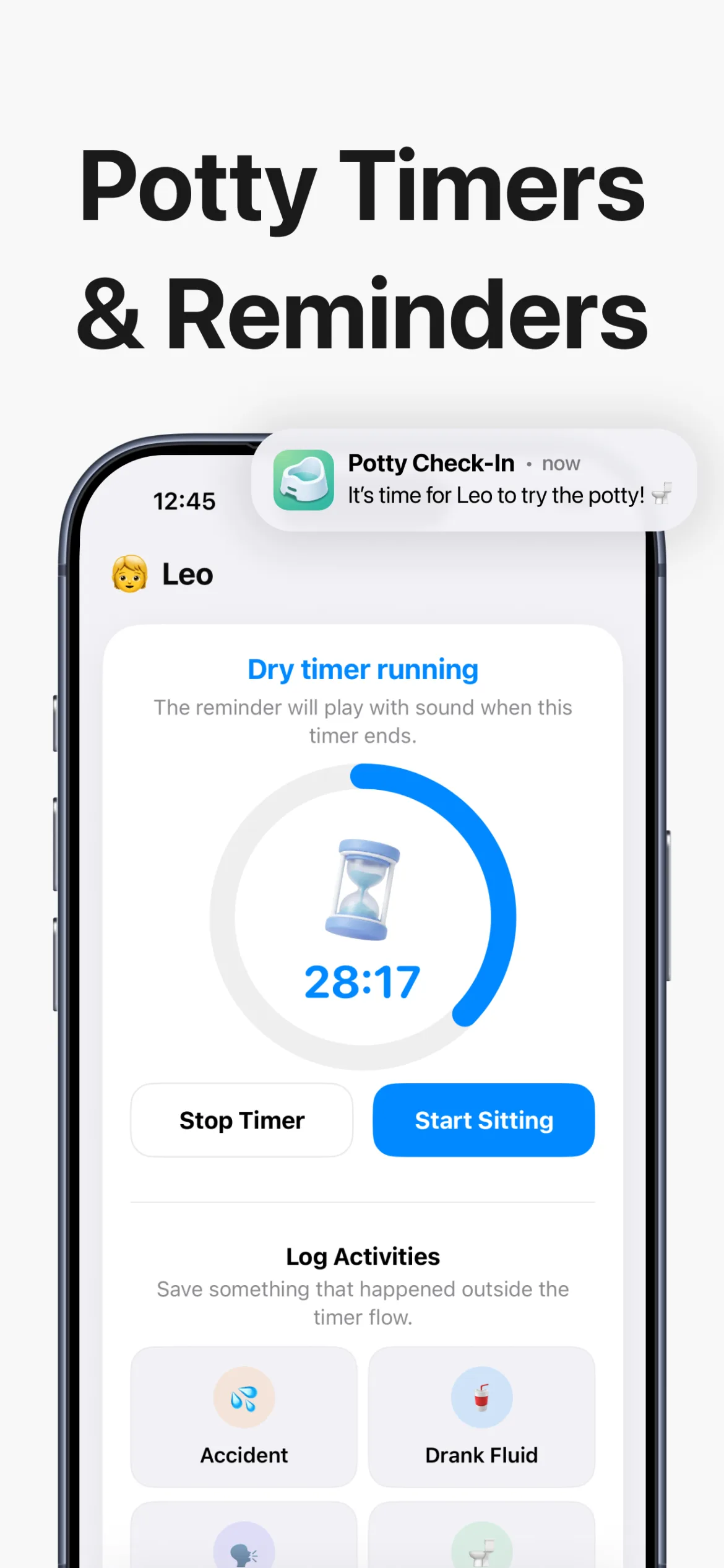
- 5. Maintain Consistent Timer Prompts:Continue using your automated 60-to-90 minute iPhone timer to maintain structured check-in routines throughout the seat transition.
Clinical Insights & Edge Cases
Never flush the toilet while your child is still sitting on it. The sudden suction roar and cold splash of water can create lasting phobic trauma, causing children to refuse adult toilets for months. Always let them stand, turn around, and wave 'bye-bye' to the waste before flushing together.
Common Obstacles and Hidden Friction Points
"Dangling feet on an adult toilet increases pelvic floor tension by 40%, directly prolonging sitting time and inhibiting complete bladder emptying."
Expecting a toddler to balance on an adult toilet without a reducer ring or footstool causes postural insecurity, leading to sudden refusal and constipation.
Automate This in 1 Tap with Potty Training App
Potty Training App's 5-minute sitting guardrail keeps toilet visits focused and brief, ensuring children do not experience leg numbness or fatigue during adult toilet sits. Runs 100% offline using CoreData local SQLite storage, eliminating cloud latency and protecting child privacy.