How to Tell If Your Toddler Is Truly Ready for Potty Training
How can parents determine if a toddler is truly ready for potty training?
A toddler is truly ready for potty training when they demonstrate three concurrent markers: physiological bladder capacity (dry for 2 hours), physical motor independence (pulling pants down), and cognitive awareness (communicating the urge to void before or during elimination).
Physiological & Developmental Foundations
Starting potty training based solely on an arbitrary calendar age—such as exactly on a second birthday—is one of the most common causes of parental frustration. While chronological age provides a general guideline (typically between 18 and 30 months), biological and neurological readiness varies widely among individual toddlers.
Attempting to train a child before physiological readiness is present turns the process into an exhausting exercise in catching leaks, often lasting 6 to 9 months. Conversely, starting when a child exhibits all core readiness markers typically results in complete daytime continence in under 3 to 4 weeks.
Clinical readiness encompasses three distinct domains: physiological (bladder volume and sphincter reflex control), motor (independent mobility and undressing), and cognitive-behavioral (receptive language, desire to imitate adults, and interoceptive awareness).
Step-by-Step Practical Protocol
- 1. Assess Bladder Storage Capacity:Verify your toddler stays dry for at least 1.5 to 2 hours during daytime naps or play. Frequent dribbling every 15 minutes indicates bladder reflex immaturity.
- 2. Test Motor Dressing Skills:Ensure your child can grab elastic-waist shorts and push them down over their hips without severe struggle. Independent clothing removal is essential for self-sufficiency.
- 3. Observe Gestures of Elimination Awareness:Notice if your child squats behind the couch, stops mid-stride, or pulls at a wet diaper. Conscious awareness of elimination precedes voluntary holding.
- 4. Check Receptive Language and Instruction Following:Verify your child can comprehend two-part verbal directions such as: 'Pick up your bear and put it in the toy box.'
- 5. Gauge Desire for Cleanliness and Autonomy:Look for signs that your child dislikes the feeling of a soiled diaper and shows interest in adult bathroom rituals and toilet flushing.
Clinical Insights & Edge Cases
If your child meets the motor and cognitive criteria but still wets their diaper every 30 minutes, their bladder capacity has not yet matured. Wait 4 to 6 weeks and re-evaluate. Giving the central nervous system time to mature saves weeks of cleaning frustration.
Common Obstacles and Hidden Friction Points
"Starting potty training when all 3 readiness domains are present cuts total time to continence from 24 weeks down to an average of 3.8 weeks."
Relying on calendar age alone leads parents to push unready toddlers into stressful bathroom battles that foster stubborn refusal.
Automate This in 1 Tap with Potty Training App
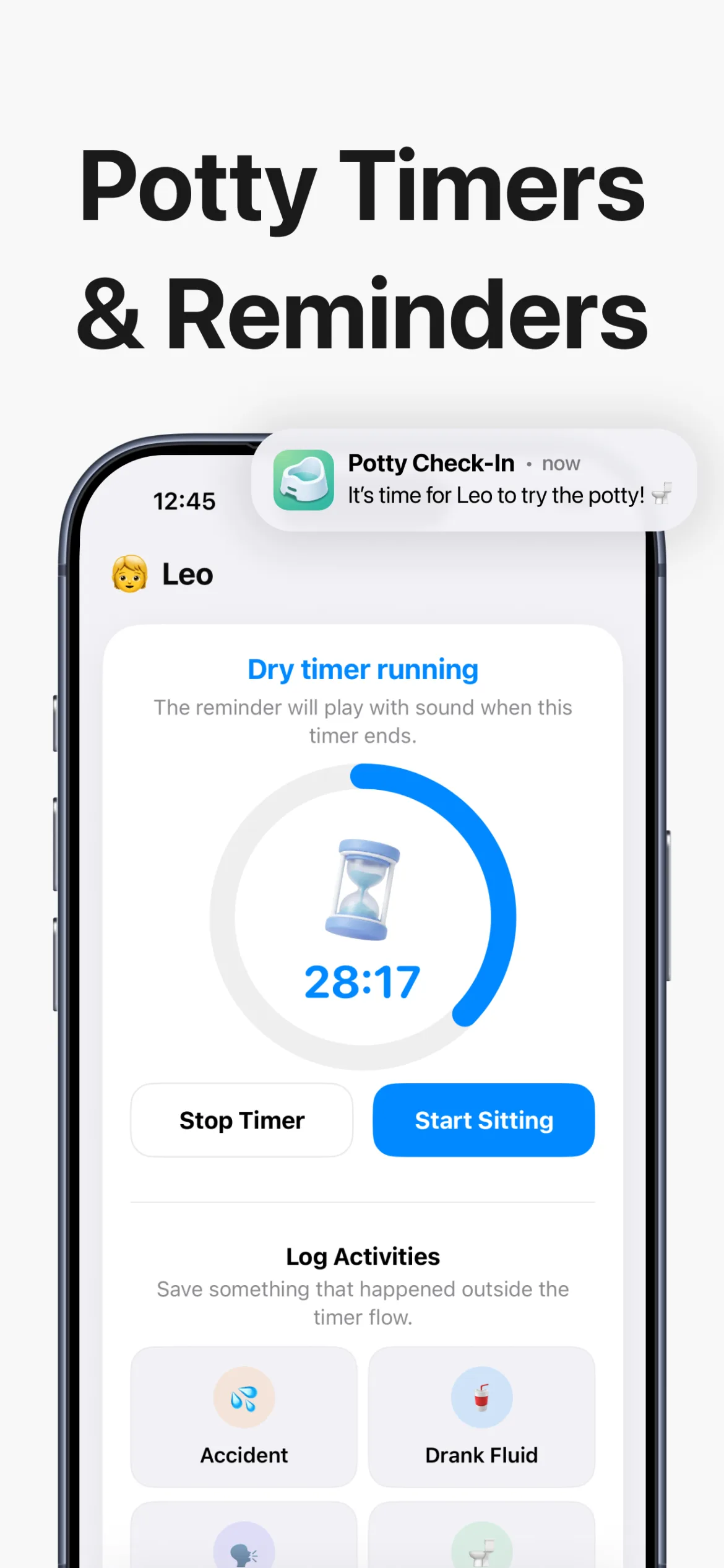
Potty Training App tracks your child's dry hold times during initial baseline observation, giving you objective data on whether their bladder capacity is ready for training. Runs 100% offline using CoreData local SQLite storage, eliminating cloud latency and protecting child privacy.